The English Psyche: When Spelling and Gardening Come Together
Apparently, how you trim your bushes directly influences the precision of your language rules. Or is it the other way around? Let's find out!

What’s the most frustrating thing about learning English?
Some say it’s the notoriously inconsistent pronunciation. For example, there are no less than 7 different ways to pronounce the cluster ough.
Others point to the significant number of fake grammar rules that are nevertheless widely followed even by well-educated native speakers, for example Never end a sentence with a preposition! or Don’t split an infinitive!
A Bit of History
To explain this mess, some linguists point to the Norman Conquest, a pivotal moment in the 11th Century when a foreign minority established itself as the ruling class in Britain.
The Normans spoke a variety of French and their descendants continued to rule the country for several centuries, severely limiting not only the use of English in state affairs but also its consolidation as a standardized language.
To make things worse, just before it regained its influence, English underwent a transformation called the Great Vowel Shift. This is the period when, roughly speaking, the /i/ became an /ai/, the /a/ became an /ei/, the /e/ became an /ii/, and so on…
What Makes a Language
History, however, can’t explain everything. Languages are fluid and change constantly. What keeps them stable is institutions called language regulators. Without an established standard, a language is like a lawless country.
The oldest regulator is the Accademia della Crusca which was founded in 1582 with the goal of maintaining the purity of the Italian language. Its birthplace is Florence, the most influential city during the Renaissance. As a result, the Florentine dialect became the foundation of modern Italian.
Half a century later, following the example of the Florentines, Cardinal Richelieu founded what is probably the most famous language regulator in the world, Académie Française. No one, be it a government official or an online influencer, can challenge its authority. It maintains the most comprehensive dictionary of the French language.
The English Psyche
Anyone who has waited in line at an UK supermarket knows that English people love rules and regulations. What they don’t love is writing them down.
Just like the English language has no single regulator, the UK as a country has no codified constitution. This is, again, not an accident. The idea that order can be achieved naturally instead of imposed institutionally runs deep in the British psyche. In a culture that prides itself on its ability to self-regulate, the lack of rigid rules is not an oversight but a feature.
However, the most vivid expression of this liberal attitude to order can be found not in the legal system but in horticulture.
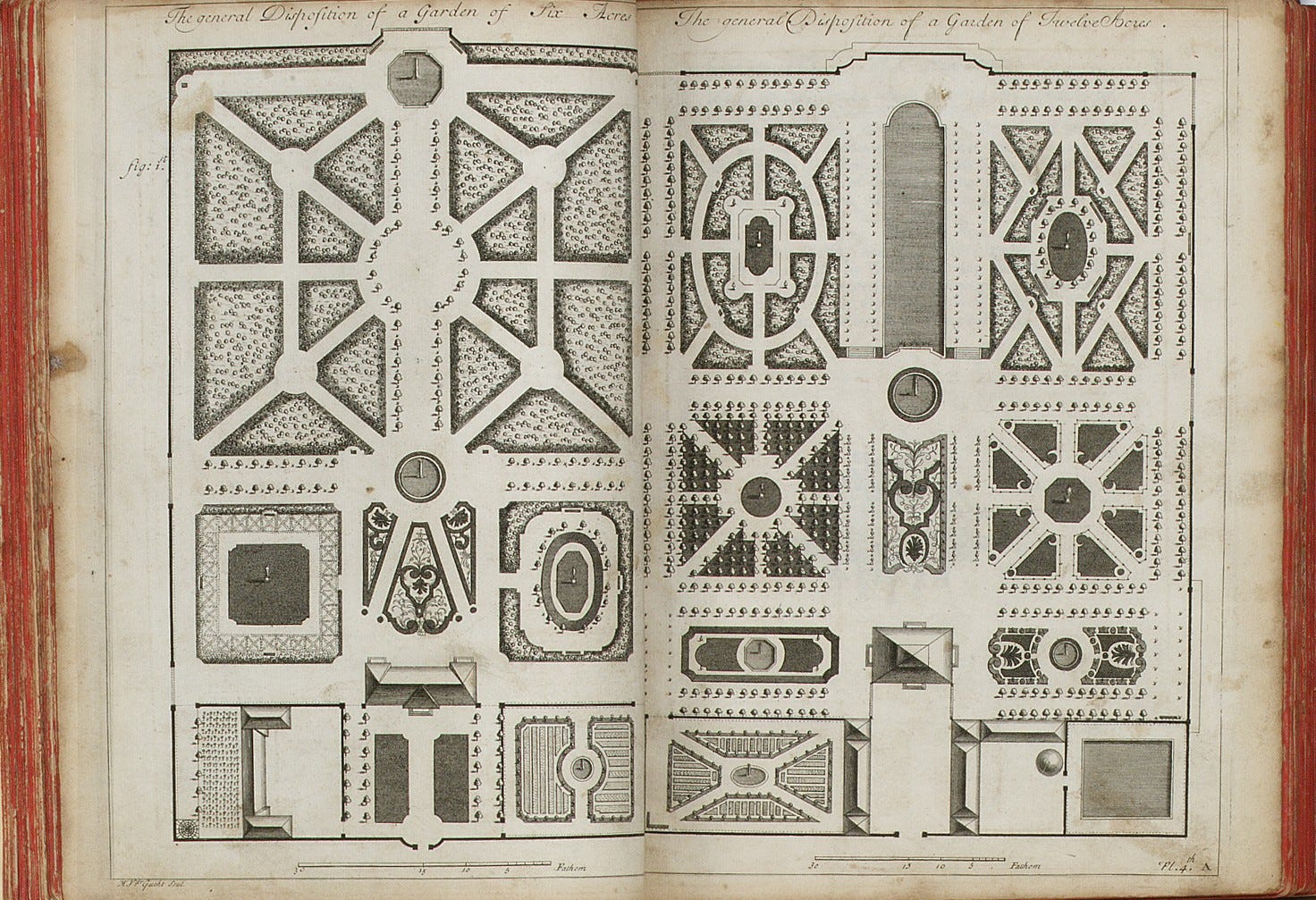
Until the 18th Century, European gardening was dominated by the French formal style (le jardin à la française), perfected by landscape architect André Le Nôtre, who designed the Gardens of Versailles. Their forced, often elaborate geometry reflected the humanist ideals of the Renaissance. Plants were treated as ornaments in a design that celebrated human thought and ingenuity.
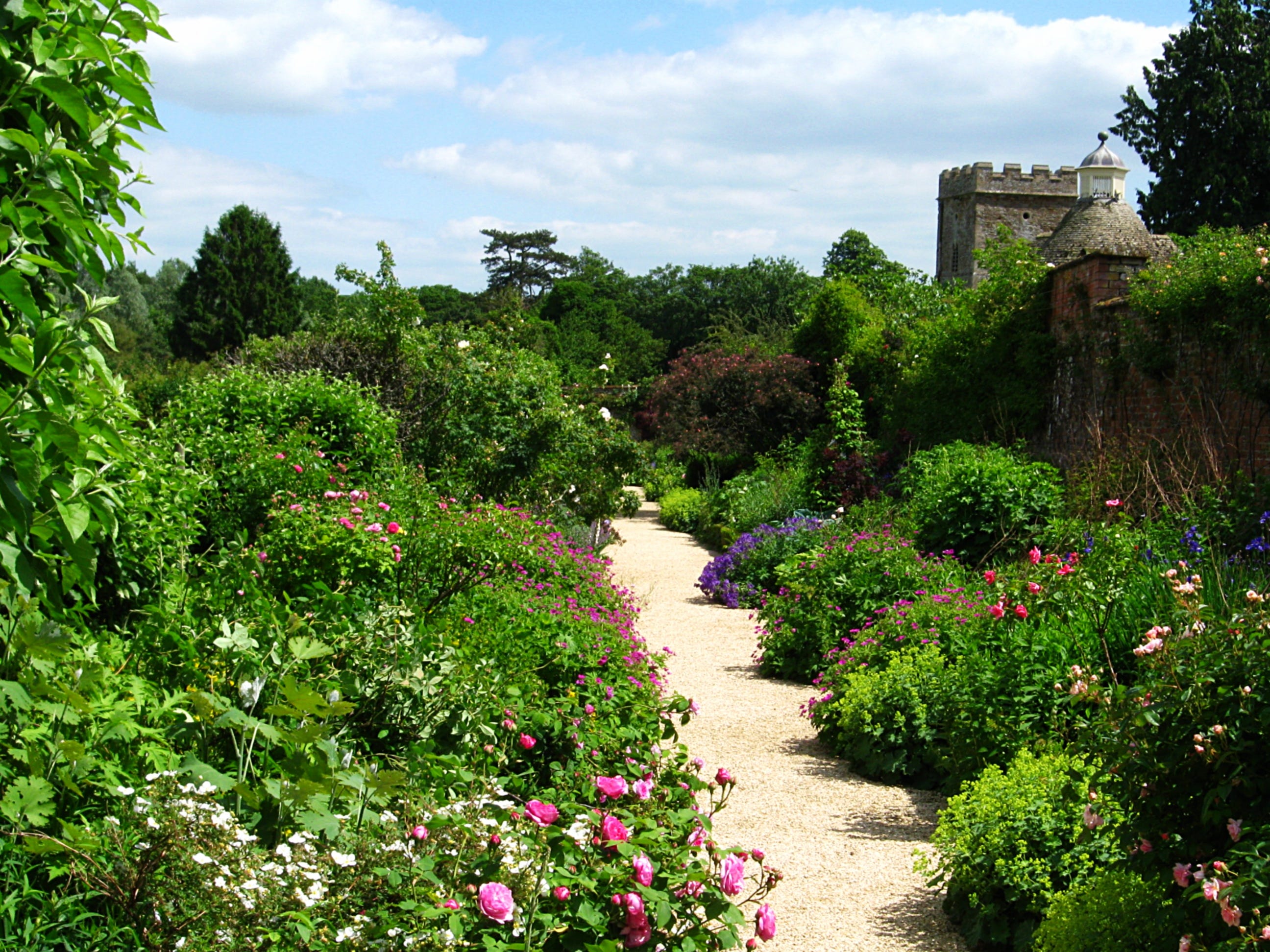
Unsurprisingly, the most prominent pushback against this concept came from England, where two landscape designers, William Kent and Charles Bridgeman, introduced an alternative that freed nature from the tyranny of symmetry. The English landscape garden is spiritually closer to its Japanese and Chinese counterparts, where plants are allowed to branch freely and retain their natural shapes.
The style reached its golden age under Kent and Bridgeman’s successor, Lancelot “Capability” Brown who designed more than 170 gardens. English writer Hannah More described his style as “grammatical”, quoting a conversation:
‘Now there’ said he, pointing his finger, ‘I make a comma, and there’ pointing to another spot, ‘where a more decided turn is proper, I make a colon; at another part, where an interruption is desirable to break the view, a parenthesis; now a full stop, and then I begin another subject.’