
The Language of Perfume
Smell is probably the only sense that doesn't have its own vocabulary. Instead, it borrows heavily from taste and, surprisingly, music!

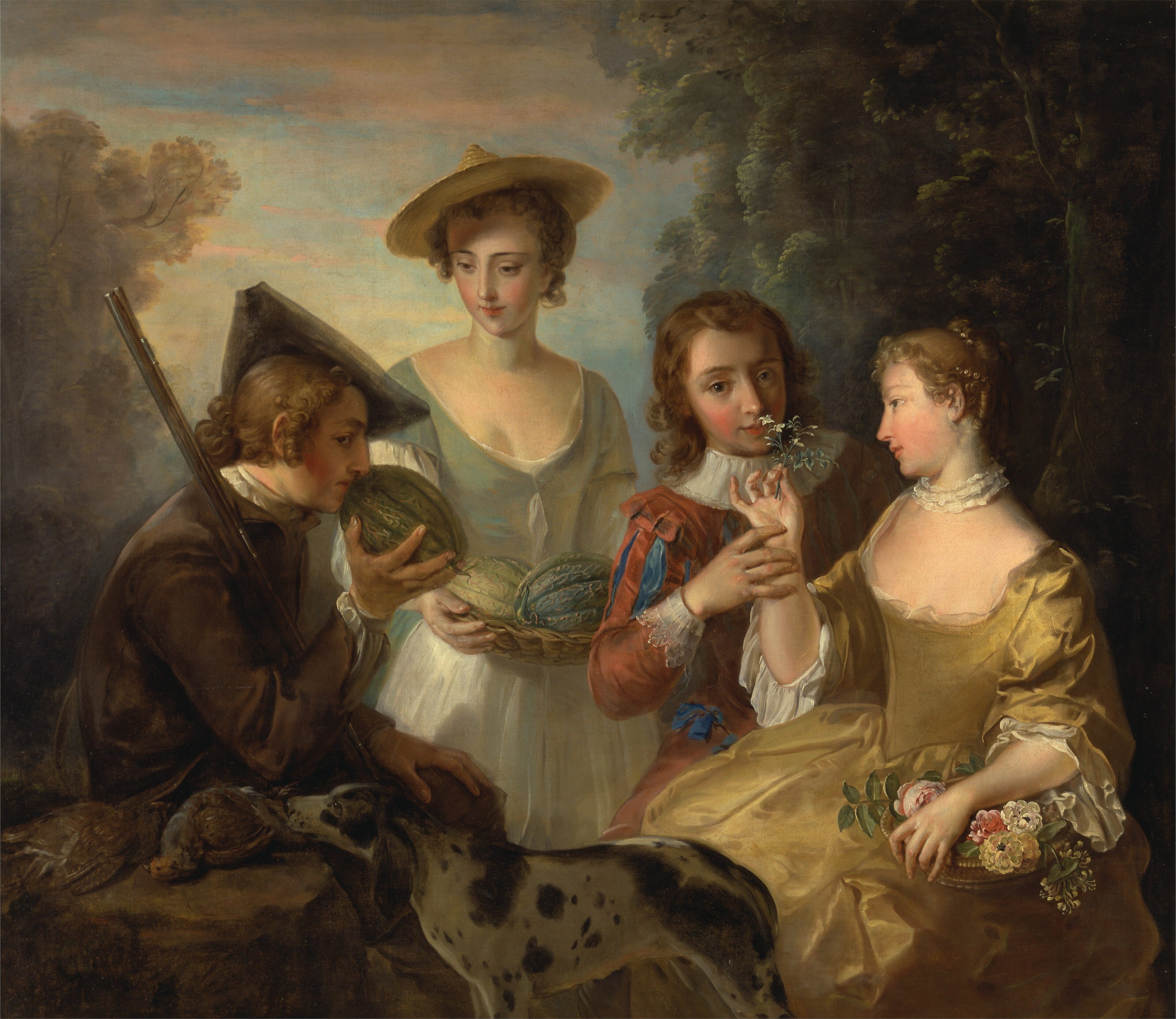
Of all five senses, smell is the most elusive. It’s hard to abstract, and most languages lack proper vocabulary to describe the sensations it triggers. If our sight were as precise as our sense of smell, we would be bumping into each other like headless chickens.
Take one anecdotal example. It took me more than two days to realize I lost my ability to smell during the COVID-19 pandemic. I had to stick a bottle of perfume right under my nose to realize something was wrong. Surprisingly, there was no significant change in the quality of my life apart from the fact that food tasted much blander. That’s how I learned that, alongside taste, smell plays an essential role in the perception of flavor.
The concept of the five senses (sight, hearing, smell, taste, and touch) reminds me of grammar rules. On one hand, it’s quite useful for general descriptions. On the other, once you examine how human perception works in detail, the divisions between these rigid categories quickly break apart.
Aside from taste, smell influences another, far more mysterious aspect of our minds: our ability to recall the past.
She used a cheap, sweet perfume called ‘Tagore.’ Ganin now tried to recapture that scent again, mixed with the fresh smells of the autumnal park, but, as we know, memory can restore to life everything except smells, although nothing revives the past so completely as a smell that was once associated with it.
This excerpt from Vladimir Nabokov’s novel Mary illustrates a phenomenon most of us are intimately familiar with: Recalling the memory of a smell at will is impossible. But when present, a familiar smell can make us relive past moments with remarkable intensity. Perhaps this is why, imperfect as it is, this sense is so important to us.
The English language relies heavily on comparisons and derivative words when describing smell. Fruits are fruity, fish is fishy, and cooked cauliflower smells like shit. The limitations of this method might not be obvious at first but just imagine describing colors in a similar way. What if the words green and red didn’t exist, and we used analogies like grassy and bloody instead? Would you want to dye your hair bloody?
Since there are only a handful of languages that have developed abstract words for smell, most of humanity seems stuck with using second-hand substitutes. But limitations can also inspire creativity.
In a profile of French perfumer Francis Kurkdjian for The New Yorker, Rachel Syme describes his most famous fragrance, Baccarat Rouge 540, as evoking “something air-gapped and untouched by human sweat, like a new Porsche that happens to be filled with cotton candy.”
Since very few people have had the chance to smell the interior of a brand new Porsche, Syme’s comparison is not meant to inform the reader about the actual aromatic composition of the perfume. Her objective is to create a sense of unattainable luxury. After all, she is referring to a product whose price can reach 750 €.
Professional perfumers use similar tricks that create evocative allusions to taste and emotions. One of the most popular classification methods recognizes four main groups of fragrances:
Amber, subdivided into Woody Amber, Amber, and Soft Amber;
Floral, subdivided into Floral Amber, Soft Floral, and Floral;
Fresh, subdivided into Fruity, Green, Water, Citrus, and Aromatic;
Woody, subdivided into Dry Woods, Mossy Woods, and Woods.
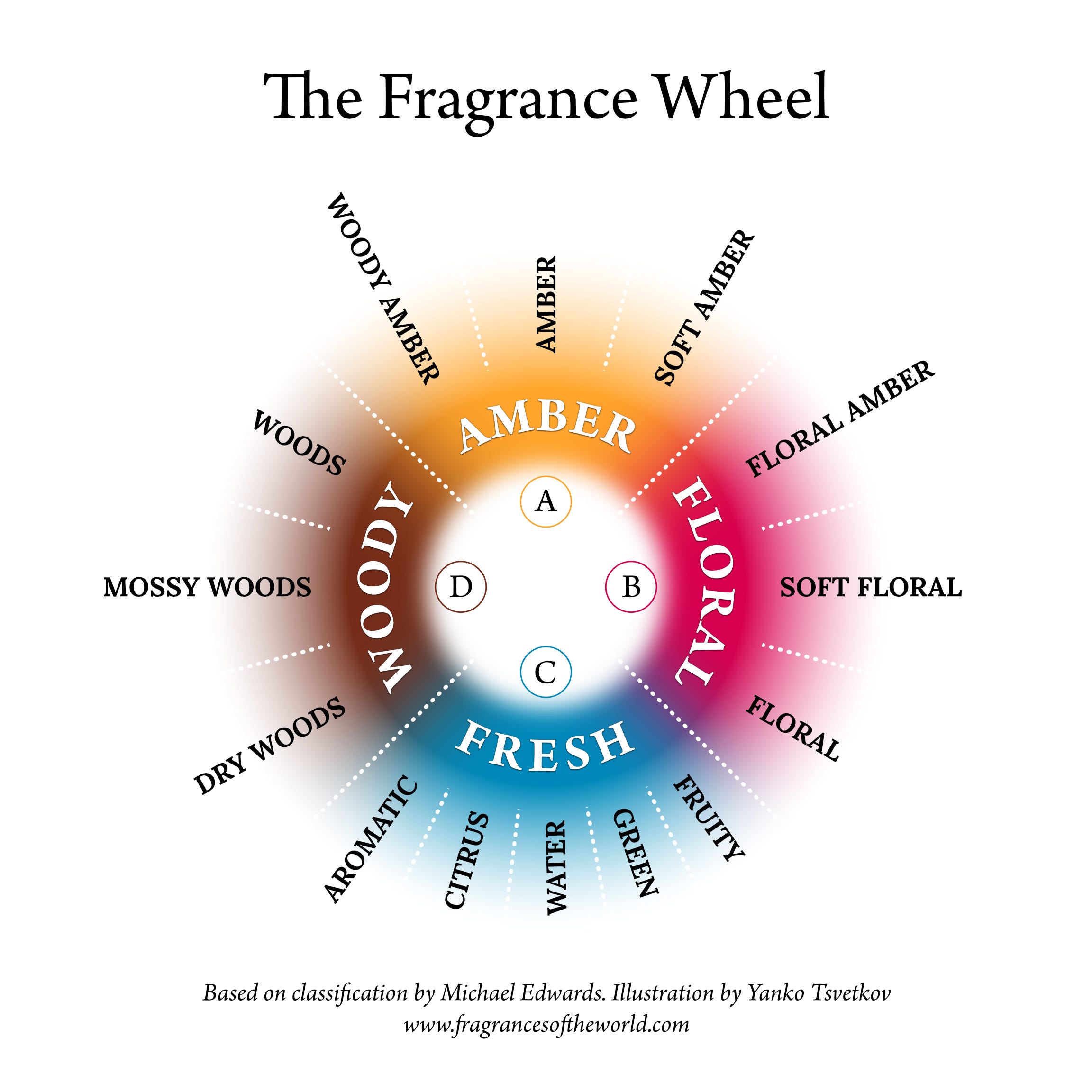
A single fragrance component is defined as a note, a term borrowed from music theory. A combination of notes is known as an accord.
The Amber category contains patchouli and sandalwood notes. The Floral contains vanilla and berry notes. The Fresh contains lavender, geranium, bergamot, and ozone notes. The Woody contains cedar, pine, moss, and vetiver notes.
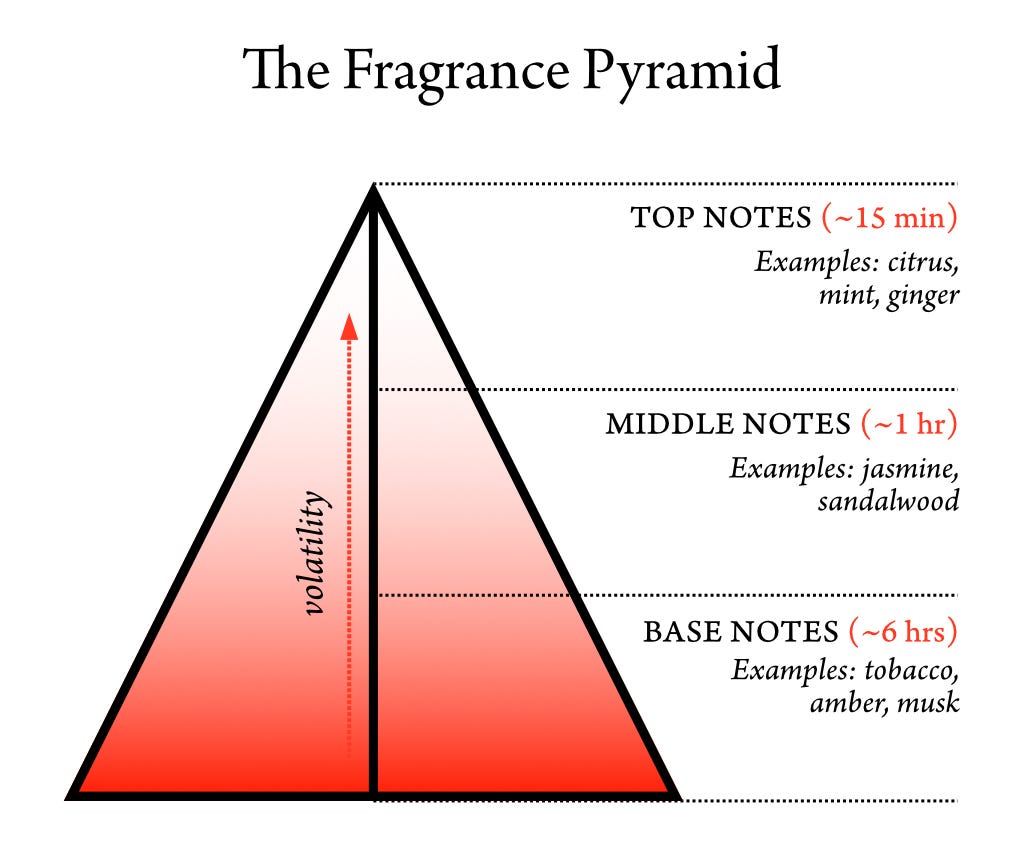
Not all notes are created equal. The chemical composition of a fragrance affects its volatility—the amount of time it takes for it to evaporate and disappear. And since every perfume is composed of various fragrances, its smell inevitably changes as notes emerge and disappear as the day progresses.
Ironically, our vocabulary deficiency regarding smell inspires us to treat perfumes as musical compositions—a symphony that has its own movements and variations. And most of us would agree that symphonies are better experienced than described.